https://bigthink.com/starts-with-a-bang/how-large-universe/

The million-dollar math problem hardly anyone is trying to solve
The intimidating legacy of the scariest problem in mathematics
The intimidating legacy of the scariest problem in mathematics
In October 2024 I attended a workshop at Harvard University where mathematicians talked through the uses of artificial intelligence in their field. Most were less worried about the future of math than excited about a new tool they might use. During one coffee break, I found myself in a group of participants who all agreed that it made no difference whether a human or a computer solved their favorite open problem. They just wanted to read the proof.
“So you really don’t care whether the Riemann hypothesis gets solved by a human or AI?” I asked. I thought I clocked a slight chill, exchanged smirks, knowing looks. It’s not unusual for me to feel a step behind in these circles.
“An AI that can prove the Riemann hypothesis is not one I’d want to meet,” said Andrew Sutherland, a number theorist at the Massachusetts Institute of Technology. “If that happens, mathematicians having jobs will be the least of our problems.”
I’d merely been tossing out the name of an open question I’d heard of. But I began to wonder: What is this math puzzle that is so complicated only a truly formidable superintelligence could resolve it?
Ever since it was first published, in 1859, Bernhard Riemann’s conjecture about prime numbers has made every list of the most important unsolved mysteries in mathematics. In 1900 mathematician David Hilbert drafted a list of problems to be solved as a blueprint for 20th-century math, and one of them was Riemann’s hypothesis. But at the end of that century the still-open question warranted another wanted poster. In 2000 the Clay Mathematics Institute promised a million-dollar bounty to anyone who solved the Riemann hypothesis, making it one of its seven “Millennium Problems”—the 21st century’s own aspirational to-do list.
The Riemann hypothesis is a claim about a mathematical function so gnarly that for most numbers fed as its inputs, no one knows its exact output. Mathematicians are particularly interested in which numbers will lead to the value of this function being zero. Knowing these inputs would essentially give number theorists superpowers. In an instant they’d gain an unprecedented command of their rawest material, the prime numbers. They would be able to say precisely where all the prime numbers lie along the infinite number line. Turning the hypothesis into a theorem would have sweeping consequences across mathematics, including the math behind cryptography and even nuclear physics.
“An AI that can prove the Riemann hypothesis is not one I’d want to meet.” —Andrew Sutherland, M.I.T.
Yet despite the handsome heap of rewards stacked behind it, progress toward the Riemann hypothesis is scarce. There’s no news to share. “The basic status is: nothing is happening, and I don’t really expect anything to happen,” says Alex Kontorovich, a mathematician at Rutgers University. Hardly anyone in the field is even working on it. “I don’t spend too much of my day really thinking about it,” says James Maynard, a mathematician at the University of Oxford. “I just don’t really have any good idea of how to get started.”
Why?
The Riemann hypothesis has assumed such a central place in mathematics because of the exalted status of prime numbers. “Asking me why number theorists care so much about prime numbers is kind of like asking why physicists care so much about forces,” says Brian Conrad, a mathematician at Stanford University, perhaps with a tinge of offense.
This obsession goes back thousands of years, to the beginnings of math itself—which, of course, started with counting. The ancient Greeks, for example, held whole numbers as paramount. They studied how to combine them to produce other quantities. You can construct a set of 15 stones by counting three at a time, for instance. But some numbers can’t be built this way—there’s no way to get 17 stones without counting out each one.
These “prime” numbers, the Greeks realized, are primordial, atomic, fundamental. You can build any number that isn’t prime by multiplying a unique combination of primes together, called its “prime factorization.” Around 300 B.C.E. Euclid proved that there are infinitely many of these building blocks along the number line. But no one could figure out why they are where they are. “On the one hand, this sounds totally bizarre—primes just are what they are. You’re either a prime, or you’re not,” Maynard says. “But one of the best ways to understand prime numbers is often to think about them as being these somewhat random objects.”
So mathematicians became fixated on looking for meaning amid this randomness. During the Enlightenment they constructed vast tables of numbers and their prime factorizations, computing them as high as they could using tedious, handwritten algorithms. To a teenager named Carl Friedrich Gauss, studying these tables became a pastime in the late 1700s. In them he found an order that had eluded mathematicians for millennia.
Between 0 and 100 there are 25 primes. But between 1,000 and 1,100 there are only 16. As numbers get higher, fewer of them are prime. This relation makes sense: the number 17 has only 16 smaller options to be divided by, whereas 117 has 100 more to avoid—it’s “harder” for it to be prime.
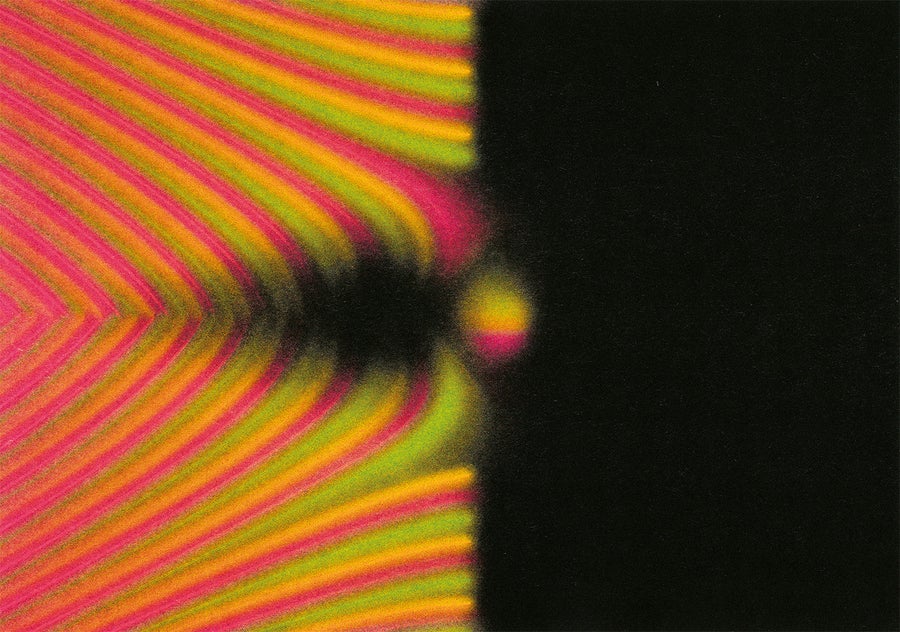
The Riemann zeta function defines the sum of an infinite series involving a number with both a real and an imaginary part. It governs the locations of the prime numbers, the most fundamental objects in number theory.
Gauss obsessively compared the numbers of primes in different intervals, going as high as three million. He observed that this drop-off continued and became more predictable as the numbers got higher. Poring over his tables, Gauss eventually scrawled out an equation for the trend. It predicted roughly how many primes you’d find the higher on the number line you searched.
He eventually moved on to more austere and abstract fixations spanning all of math and statistics. In an 1801 treatise Gauss augmented the primes’ power even further, showing they were the key to performing calculations in strange but essential finite number systems. But he never figured out how to prove his initial guess about where the primes lived. In the mid-1800s that effort fell to his mathematical disciple, a young theology student at the University of Göttingen in Germany named Bernhard Riemann, whom Gauss won over with his lectures and trained in the way of numbers.
Riemann, a lapsed theologian, balked at the primes’ apparent randomness and sought meaning in them. This quest led him to imagine an impossible-seeming mathematical machine that could nail down the precise location of every single prime in existence. It would walk along the real-number line, picking out the primes and skipping the rest. The workings of this magical machine, he found, could be inscribed in a function that came to be called the Riemann zeta function. The zeta function takes as its input a complex number, the sum of a real number plus an “imaginary” component—a coefficient multiplied by the square root of –1, called i.
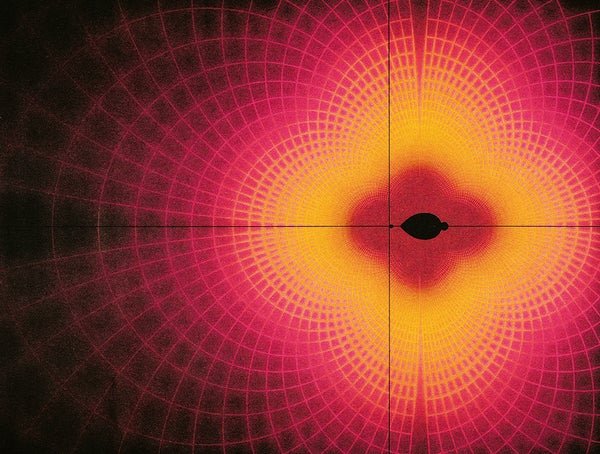
Mathematicians picture the Riemann zeta function by using the “complex” plane, with real and imaginary axes. Every complex number is a point on this plane, with its x and y coordinates signifying the size of its real and imaginary parts. Put that number into the Riemann zeta function and work out the resulting complicated equation, and you’ll get its output: a different complex number. So the zeta function gives one complex value for every point on the plane. And at some special points on the plane, its value is zero.
Riemann realized that the locations of these zeros were key to building his machine. He started with a rudimentary prototype of it—Gauss’s guess for the frequency of the primes, which tells you roughly how many primes fall in any interval of the number line. But the true primes’ locations didn’t match this prediction exactly. (Later mathematicians would prove Gauss’s guess by using ideas introduced by Riemann.) Rather they were scattered around it.
But this seemingly random scatter, this leftover error in Gauss’s prototype machine, could be described with the zeros of the zeta function. Specifically, the scattering could be broken into an infinite number of distinct, interacting pieces, the way a musical note can be decomposed into harmonics. Each zero determines one of these harmonics. Its imaginary part determines the harmonic’s frequency, its real part the harmonic’s strength—how loudly that note is played. Each of these harmonics can be added to Gauss’s machine to bring it closer to the perfect one Riemann sought.
Finding every zero of the zeta function—determining the pitch and volume of every instrument in this prime symphony—would tell you the precise locations of all the primes, fully revealing their rich music. But Riemann knew this solution was out of reach. The behavior of the zeta function was as mysterious as the primes themselves. Still, anything he could say definitively about its zeros would be an enormous constraint on the primes, more than mathematicians had ever known.
In his 1859 paper on the hypothetical machine, Riemann made a guess. The real parts of every zero, he declared, were all the same: ½. They differed only in how imaginary they were. This attribute placed them all along a single vertical line on the complex plane, the line that intersects the x-axis at ½. The first such point, Riemann had surmised, was at 14.13. The next was at 21.02.
The paper cemented the Riemann hypothesis: every one of the Riemann zeta function’s zeros falls on this “critical” line, with a real part of exactly ½. The conjecture vastly simplified the music of the primes. Without it the primes were like a conductorless symphony, with innumerable pitches being sounded by instruments at different volumes. “The Riemann hypothesis says all these different instruments in the orchestra of the primes play at exactly the same volume,” Kontorovich says.
At this point you might be wondering why this strange function on the complex plane is so intertwined with the building blocks of whole numbers and why their relation parallels musical harmonics. If so, you’re experiencing just a sliver of the wonder mathematicians feel when they reflect on the Riemann hypothesis. Mathematicians thrive on surprising connections. These links are clues that alert them to something deeper under the surface. Lauren Williams, a mathematician at Harvard University, recently told me that her research is most exciting “when I discover that two mathematical objects that had no reason to be related to each other actually are. Then it’s kind of a mystery to try to figure out why and how they’re related.”
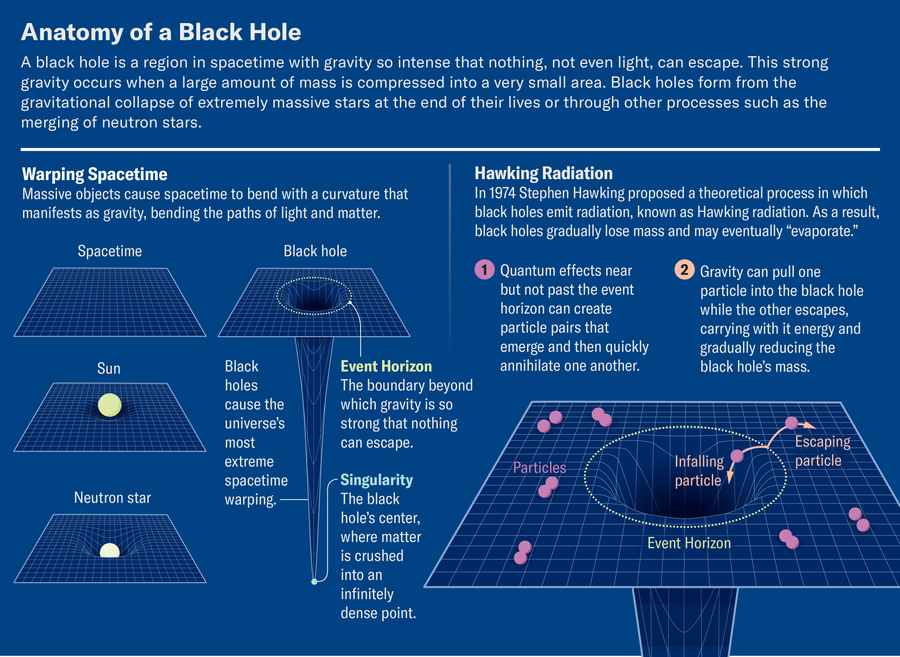
The Riemann hypothesis has proved to be a font of surprising connections all over math and beyond it, to the realm of the physical world. In 1972 physicist Freeman Dyson of the Institute for Advanced Study in Princeton, N.J., happened to have tea with a mathematician who’d noticed strange patterns in the statistics of the zeta function. Dyson immediately recognized the patterns—they matched the theory he’d worked out for the energy levels of atomic nuclei. He unexpectedly helped to solve a problem in pure math, but to this day the origin of the connection remains totally obscure. The Riemann hypothesis has since shown up in the random motion of particles, chaos theory and even the theory of black holes.
Mathematicians haven’t waited for a proof to wield the Riemann hypothesis’s immense power. “There are hundreds of papers that prove ‘x is true if RH holds,’” Kontorovich says. “We’ve already been assuming it was true for a long time.” Using this hypothesis as a starting point greatly broadens what a mathematician can do when it comes to the primes. Their music goes from chaotic to ordered—suddenly the only things missing are the zeros’ imaginary parts.
The Riemann hypothesis has proved to be a font of surprising connections all over math and beyond to the physical world.
In fact, the Riemann hypothesis has inspired an entire swath of analogies that mathematicians have run with. All kinds of mathematical objects, from simple equations to high-dimensional shapes, have associated “L-functions” that describe some of their properties in the way the zeta function describes the primes. And each L-function has a special critical line like the zeta’s x = ½: if its zeros lie on this line, then the object it describes makes far more sense.
Mathematicians have taken Riemann’s lead, postulating “generalized Riemann hypotheses.” If all L-functions have their zeros in the most natural place, the amount of mathematics unlocked is infinitely larger. So in a sense, mathematicians already know much of what proving Riemann right would unleash—it’s already in the literature, awaiting this one big missing piece.
So where is that piece? “The Riemann hypothesis has had a few good ideas over the years, but none of them have really gotten to the nut of the matter,” says Andrew Granville, a mathematician at the University of Montreal. “They all ran out of steam early.”
Two years ago two well-known mathematicians, Maynard of Oxford and M.I.T.’s Larry Guth, made the biggest breakthrough on the subject of the Riemann hypothesis in decades. All anyone had proved was that none of the zeros is too far from the critical line. But this boundary had been stuck for so long that people were starting to think it couldn’t be pushed further. “I genuinely thought there must be some intrinsic reason that it was stuck,” Granville says.
By developing entirely new techniques in number theory, Maynard and Guth managed to tighten the bound slightly—but only slightly. “These are two of the most brilliant people around, and even they got this marginal improvement,” Granville says. And there is no clear way to proceed. “I don’t really view our work as the right direction for solving the Riemann hypothesis,” Maynard says. “I think of our work as more of a workaround for the fact that we don’t know how to solve the Riemann hypothesis.”
In a way, this difficulty makes it math’s most and least popular conjecture. Mathematicians focus their efforts on problems within a sweet spot: hard enough (given current methods) that people care about solving them but easy enough that they might make some headway.
To Maynard, the lack of any clear route to solving the Riemann hypothesis is part of what makes the problem so important. It’s a hint that whatever the route is, it will come only by way of lots of new mathematics. “I think the Riemann hypothesis is true for a really good reason. I just have no idea what that reason is,” Maynard says. A proof that elucidates that reason, he says, would bring with it all kinds of far-reaching insights—a mastery of numbers that would open untold mathematical doors. It’s the veiled contents of this mythical proof that so beguile mathematicians they would cede their autonomy to a large language model to see them.
“Provided I could understand the proof, be it from an alien or God or AI,” Maynard says, “I would be superexcited.”